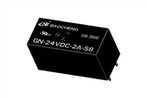
1. The contact is loose and cracked
The contact is the electrical contact part of the relay to switch the load. The contacts of some products are press-fitted by riveting. The main disadvantages are loose contact, cracking of the contact or excessive deviation in size and position, which will affect the contact of the relay. reliability.
The loosening of the removal point is caused by the unreasonable size of the mating part of the reed and the contact or the operator's improper adjustment of the riveting pressure; the contact cracking is caused by the excessive hardness of the material or the excessive pressure. For contacts of different materials, different materials are used. Some contact materials with higher hardness should be annealed, and then contact manufacturing, riveting or spot welding should be carried out.
The contact should be made carefully. Due to the tolerance of the material, the cut length should be determined after trial touch each time. There should be no flashing, scratching and underfilling in the manufacturing of contacts. Contact riveting is caused by the operator's misalignment of the touch tool and the misalignment of the upper and lower touch.
Contact damage and contamination are caused by oil contamination and iron filings on the touch tools that have not been cleaned up. No matter what kind of malaise, it will affect the reliability of the relay. Therefore, in the process of contact manufacturing, riveting or welding, the self-inspection regulations of first article inspection, intermediate sampling and final inspection must be followed to improve assembly quality.
Second, the relay parameters are unstable
A considerable part of the parts of the electromagnetic relay is riveted and fitted, and the main problem is that the riveting is loose or the bonding strength is poor. This kind of fault will make the relay parameters unstable, the parameters will change greatly under high and low temperature, and the resistance to mechanical vibration and impact is poor. The main reasons for this problem are the over-tolerance of riveted parts, improper placement of parts, unqualified tooling quality or inaccurate installation. Therefore, it is necessary to carefully check whether the tool and the riveted parts meet the requirements before riveting.
3. Deformation of riveting parts in electromagnetic system
After riveting, the parts are bent, twisted, and the pier is thick and black, which will cause difficulties in the assembly or adjustment of the next process, and even cause scrap. This problem is mainly caused by the excessive length and short of the riveted parts, the uneven force during riveting, the deviation of the die assembly or the wrong design size, and the improper placement of the parts. When performing riveting, the operator should first check whether the size, shape, and die of the parts are accurate. If the die is not installed in place, it will affect the assembly quality of the electromagnetic system or the core deformation and thick pier.
Four, glass insulator damage
Glass insulators are made of metal pins and glass sintered, which are prone to bending of pins during inspection, assembly, adjustment, transportation, and cleaning. The glass insulator is broken and cracked, which will cause air leakage and reduce the insulation and pressure resistance. The rotation of the pin will also cause the contact reed to shift, which will affect the reliable on and off of the product. This requires the assembly operator to handle the relay with care during the entire production process, and the parts should be neatly arranged in the transfer box. When assembling or adjusting, it is not allowed to pull or twist the lead pins.
Five, coil failure
There are many types of coils used in relays, either outsourced or outsourced. The coils should be separated and placed in special appliances. If they collide with each other, they will break when they are separated. When the electromagnetic system is riveted, the pressure adjustment of the hand lever press and the press should be moderate, too much pressure will cause the coil to break or the coil frame to crack, deform, and the winding breakdown. If the pressure is too small, the winding will loosen and the magnetic loss will increase.
Multi-winding coils generally use different colors of lead wires as heads. Pay attention to distinguishing when welding, otherwise it will cause coil welding errors. The coils with the requirements of the beginning and end are generally used as a marking method to indicate the beginning and end. Pay attention to the assembly and welding, otherwise the relay level will be reversed.