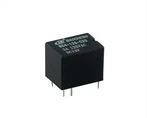
Overcurrent relay is a relay protection device that protects main equipment such as motors and transformers. It has the characteristics of definite time and inverse time. When the main equipment or power transmission and distribution system has a load or short circuit fault, the overcurrent relay will follow the regulations. Reliable actions within time limit to remove the faulty part, so as to achieve the purpose of protecting the main equipment and the power transmission and distribution system.
Working principle of overcurrent relay:
The coil of the overcurrent relay should be connected in series in the main circuit to be protected. When the current in the circuit is higher than the allowable value, the overcurrent relay will pull in, and the normally closed control contact will disconnect the protection circuit, so that the motor will stop to achieve the protection purpose. .
When the coil is connected to AC current, due to the phase shifting effect of the short-circuit ring in the electromagnet, two magnetic fluxes of different phases will be generated. This magnetic flux and the eddy current interact to generate electromagnetic force and make the aluminum plate rotate;
When the current increases to the set current, the electromagnetic torque is greater than the reaction torque of the spring, the aluminum bracket rotates the sector teeth and merges with the worm, and rises as the worm rotates, and the electromagnetic element pushes the moving iron to move;
When the gap between the moving iron and the electromagnet is reduced to a certain extent, the moving iron pulls in, and the top plate of the moving iron tail pushes the contact to close and displays the overcurrent status of the relay.